


2026 Canadian small business tax checklist for filing season

2026 Canadian small business tax checklist for filing season Hero Image

This guide covers 2026 tax deadlines, GST/HST filing rules, deductible expenses and record-keeping steps for Canadian small businesses.


Key takeaways

  1. Your income tax deadline depends on business structure and your GST/HST deadline often follows a separate calendar.
  2.  Deductions stand up when the expense was incurred to earn income and the record clearly shows business purpose.
  3. Payment reports, deposits and bookkeeping totals should reconcile before you file so your sales figures stay supportable. 

Good tax filing starts with clean sales records and current CRA dates.

Canadian small businesses made up 98 per cent of employer businesses in 2024, which helps explain why stale tax guidance causes so much confusion near filing time. A useful checklist starts with timing, then moves to tax collection, deductions and record retention. Your filing date depends on how your business is set up and your GST/HST calendar sits on its own. If you’re taking card payments online or at the counter, the totals from your checkout tools should match your books before you file. That link between tax work and sales systems keeps filing clear and defensible.


Tax return due dates shift by business type

Your income tax filing deadline depends on your legal structure. Sole proprietors file a T1 return. The 2025 return is due June 15, 2026 and any balance owing is due April 30, 2026. Corporations file a T2 return six months after their fiscal year-end.

A December 31 corporate year-end creates a June 30 filing date for the T2 return. The tax payment usually comes earlier, often two or three months after year-end depending on how the corporation is taxed. That gap matters because you can file on time and still owe interest if the payment date passed. Partnerships have their own information return rules, so the right move is to confirm the exact return your structure requires before you mark the calendar.

Set reminders 30 days before every due date tied to your business number and fiscal year-end. If you operate as a sole proprietor and collect GST/HST, you’ll have at least two tax calendars to watch. If you incorporated last year, confirm the incorporation date and fiscal year-end in your records instead of assuming December 31 applies. That quick check prevents late filing caused by using the wrong business type.

Filing checkpoint

What controls the date you need to track

Sole proprietor income tax return

Your personal return for the 2025 tax year is due June 15, 2026 if you report self-employment income.

Sole proprietor balance owing

Any income tax owing for 2025 is due April 30, 2026 even though the return itself can be filed later.

Corporate T2 return

The filing deadline lands six months after your corporation’s fiscal year-end rather than on a fixed spring date.

Corporate tax payment

The payment deadline often arrives two or three months after year-end, so it should be tracked apart from the return date.

GST/HST return and remittance

Your reporting period determines this deadline and it will not automatically match your income tax schedule.


GST/HST registration starts after $30,000 in sales

You must register for GST/HST when taxable revenues go over $30,000 in a single calendar quarter or across four consecutive calendar quarters. The threshold applies to worldwide taxable sales from your business and associated businesses in some cases. Registration starts when you stop being a small supplier. Once registered, you charge tax on taxable sales from the effective date.

A simple example helps. If your shop made $9,000, $7,500, $8,200 and $6,100 over four consecutive quarters, you crossed the threshold in that fourth quarter. If your online store lands a $34,000 quarter after a holiday rush, registration starts right away because the one-quarter test was met. Either way, you should apply quickly and update invoices and checkout settings as soon as the effective date begins.

Some businesses must register from the first sale, even if revenue is still small. Taxi and ride-sharing operators are the common example. Voluntary registration is also an option when you stay under $30,000 and want input tax credits on business purchases. That choice only makes sense if you can track taxable sales, issue proper receipts and keep your filing calendar organized from day one.

2026 Canadian small business tax checklist for filing season Image 1

Not every sale gets GST/HST in Canada

 
You do not charge GST/HST on every sale.


Some sales are taxable at the regular rate, some are zero-rated and some are exempt. Zero-rated sales are taxed at zero per cent and still support input tax credits. Exempt sales do not carry GST/HST and usually do not support input tax credits on related purchases.

Product type and province both matter. Most goods sold in Ontario carry 13 per cent HST, while the same taxable sale in Alberta carries five per cent GST. Basic groceries are commonly zero-rated. Many health care services, educational services and financial services are exempt. If you sell more than one category, each product or service should be mapped correctly in your invoicing system and online checkout.

That setup matters because the receipt is often your first line of proof. A bakery that sells bread, coffee mugs and catered meals needs separate tax treatment across those items. A professional practice that offers exempt services alongside taxable workshops needs the same care. If your tax settings are too broad, you will either overcharge customers or under-remit tax, and both create cleanup work later.

GST/HST filing follows its own calendar

GST/HST filing does not follow your income tax return by default. The CRA assigns an annual, quarterly or monthly reporting period based on revenue, though some businesses can elect another period. Most GST/HST returns are due one month after the end of the reporting period. Annual individual filers with a December 31 year-end face an April 30 payment date in many cases.

A quarterly filer with a March 31 period-end will usually file and pay by April 30. An annual filer with a December 31 year-end might file the return by June 15 if the business income is reported on a personal return, yet the remittance is still due April 30. That split catches owners who assume the later filing date covers payment as well. A separate reminder for remittance avoids that mix-up.

Payment timing affects your cash planning and your books. If sales tax is collected through an online store, a terminal or emailed invoices, that money should be tracked as tax held for remittance rather than spendable income. Set a recurring review after each month-end to check tax collected, tax paid on purchases and the balance you will remit. That routine makes GST/HST filing easier when the return opens.

Claim expenses only when records show business purpose

A small business can deduct expenses that were incurred to earn business income and are reasonable in amount. The key test is not the category name alone. The CRA will expect a clear business purpose and supporting records. Personal spending doesn’t become deductible because it passed through the business account.

  • Merchant processing fees, terminal fees and business bank charges count when your statements match your books.
  • Office supplies, software subscriptions and business-use phone or internet costs count when the service supports day-to-day operations.
  • Vehicle expenses count only for the business-use share backed by a mileage log and receipts.
  • Home office costs count for the work-use portion of eligible household expenses when the space meets CRA conditions.
  • Meals and entertainment usually count at 50 per cent when the expense relates to earning income and the receipt is retained.

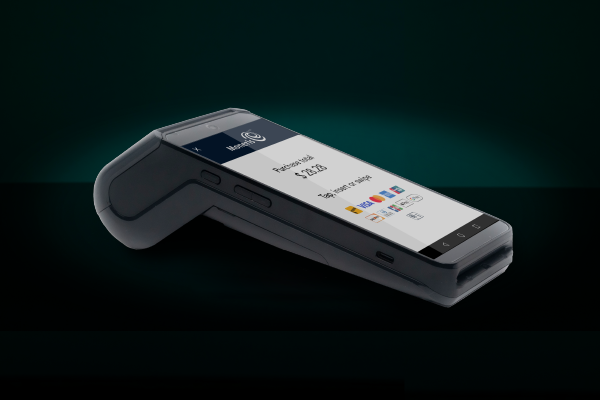
Some costs need extra care because timing and treatment differ. Equipment such as computers, furniture and payment hardware is often deducted over time through capital cost allowance rather than all at once. A contractor who pays monthly processing fees through Moneris should keep the statements with the bookkeeping file so those fees, refunds and charge adjustments tie back to the year-end numbers. That same habit helps if your accountant asks why net deposits differ from gross sales.

CRA expects 6 years of complete records

The CRA expects you to keep records for six years from the end of the last tax year they relate to. Those records can be paper or electronic if they remain readable and complete. You need enough detail to support income, deductions and GST/HST calculations. Missing documents weaken claims that would otherwise be routine.

Keep the source record, not just a summary. That means sales invoices, purchase receipts, bank statements, deposit slips, contracts, payroll records and working papers used for GST/HST returns. If you issue digital receipts, store them in a way that keeps the date, amount, tax and customer reference intact. If you scan paper receipts, make sure the copy is legible before the original is discarded.

Refunds, voids and manual corrections deserve special attention because they explain why gross sales and deposits don’t always match. A café that refunds an online order should keep the order record, the refund confirmation and the processor statement that shows the money movement. A home-based consultant who claims internet and utilities should keep the bills and the method used to calculate the business-use share. Good records don’t just support deductions. They show how you arrived at the numbers on the return.

2026 Canadian small business tax checklist for filing season Image 2


Sales totals should match deposit records before filing

 
Your return should reflect sales reconciled across your books, bank deposits and payment reports.


Gross sales, fees, refunds, tips and taxes move differently, so matching only the bank total isn’t enough. A short reconciliation before filing catches timing gaps and coding errors. That review gives you a cleaner answer if the CRA asks how a figure was calculated.

Payments Canada reported 21.7 billion retail payment transactions in Canada in 2023. That volume helps explain why a small business needs more than a handwritten sales total. Compare monthly gross sales from your checkout or e-commerce system to processor settlements and bank deposits. Then back out processing fees, staff tips, cash received and refunds so each number has a place.

This is where tax discipline becomes a day-to-day habit. If your deposits arrive net of fees, your books should still show gross sales and the fees as an expense. If your reports split card-present and online sales, keep that detail because it often explains deposit timing. Moneris reports can help you line up settlement dates with sales activity, but the judgment stays the same: filing gets easier when your tax numbers match how your business takes payments.

FAQs

  • Small businesses can generally deduct reasonable expenses incurred to earn business income. Common deductions include office supplies, advertising and marketing costs, professional fees, business insurance, rent, utilities, business-use vehicle expenses, travel costs and certain home office expenses if you work from home. Keep detailed records and receipts to support any claims. Please check with provincial and federal government websites to stay up to date on requirements.

  • You must register for a GST/HST account when your worldwide taxable revenues exceed $30,000 in a single calendar quarter or over four consecutive calendar quarters. If your revenue is below this threshold, registration is usually optional, although some businesses choose to register voluntarily to claim input tax credits (ITCs). Please check with provincial and federal government websites to stay up to date on requirements.

  • Your tax filing deadline depends on your business structure. Sole proprietors generally have until June 15 to file their personal income tax return, although any taxes owing are typically due by April 30. Corporations must generally file a T2 corporate income tax return within six months of their fiscal year-end. Always confirm deadlines that apply to your specific situation. Please check with provincial and federal government websites to stay up to date on requirements.

  • The Canada Revenue Agency (CRA) requires businesses to keep records that support their income, expenses, GST/HST returns, and tax claims. This includes sales and purchase invoices, receipts, bank statements, payroll records and other documents related to business operations. In most cases, records must be retained for at least six years from the end of the tax year they relate to. Please check with provincial and federal government websites to stay up to date on requirements.

  • No. While many goods and services sold in Canada are taxable, some are zero-rated (taxed at 0%) or exempt from GST/HST altogether. The tax you charge may also vary depending on where your customer is located. If you're unsure whether GST/HST applies to a specific product or service, consult a tax professional or CRA guidance. Please check with provincial and federal government websites to stay up to date on requirements.

Author Profile

Moneris Team

Moneris Team

Moneris is a leading provider of payment processing solutions in Canada. Our blog is your go-to resource for insights into the ever-evolving world of payments. We cover everything from the latest industry trends and technologies to practical advice for businesses of all sizes. Our blog's mission is to spotlight small businesses and provide resources that help them succeed in today's economy. Blog articles are written by members of Moneris' in-house marketing team with support from internal product and industry experts.

Recommended Articles