



Inventory management basics for small Canadian retailers
A practical guide for small retailers on stock control, reorder points, carrying cost, shrinkage and the role of a POS inventory management system.

For years, social media sat neatly in the “distribution” box. You made content, posted it, crossed your fingers, and hoped the algorithm was kind. In 2026, that mental model is officially outdated. Social platforms are now full-fledged search engines, and Canadians are using them that way every day.
This shift matters deeply for small and medium-sized businesses. Discovery no longer starts only on Google. It starts on TikTok, Instagram, Pinterest, and YouTube Shorts, often without users realizing they are “searching” at all.
Canadians are among the most connected people in the world, with 79.4 per cent of the population actively using social media in 2025, according to DataReportal’s Digital 2025 Canada report. Social platforms are not fringe channels. They are where your customers spend over two hours a day on average.
More importantly, Canadians increasingly treat social platforms as search tools. Research from Environics shows that younger Canadians view social media as a primary place to search for information, recommendations, and how-to content. TikTok, Instagram, and YouTube now play a major role in how Gen Z and Millennials decide where to eat, what to buy, and which local brands to trust.
For SMBs, this means visibility depends on more than keywords and backlinks. It depends on whether your content answers real questions inside social platforms.
Typing keywords is no longer the default behaviour. Social search is becoming multi-modal, which changes how Canadians discover content.
Visual search is one of the fastest-growing behaviours. Pinterest Lens is actively available in Canada and allows users to search directly from photos instead of words. Adobe research cited in 2025 found that 39 per cent of consumers intentionally use Pinterest as a search engine, with that number climbing even higher among Gen Z.
Voice search is also part of everyday behaviour, especially with the rise of Meta AI and voice assistants baked into smartphones and social platforms. As voice queries become more conversational, search results increasingly favour content that answers questions clearly and naturally.
This evolution means SMB social content must work harder. A pretty video is not enough if it cannot be understood, indexed, and matched to intent.
One of the biggest shifts for Canadian businesses happened in July 2025, when Google began indexing public Instagram content from professional accounts. That means your Instagram Reels, photos, captions, and profile can now appear in Google search results, including in the Short Videos tab designed specifically for vertical video content.
This change is critical for SMBs because it extends the shelf life of social content. A well-optimized Instagram post can continue driving discovery long after it was published, even for businesses without a robust website.
It also means social SEO is real SEO. Captions, on-screen text, alt text, and profile bios now influence how your brand is found both on social platforms and on Google.
Another layer is now shaping social search behind the scenes: LLMs.
Generative AI tools like ChatGPT, Gemini, Claude and Copilot increasingly surface answers drawn from publicly available social content. Reddit has become one of the most heavily relied-on sources for LLMs, following formal content licensing partnerships with OpenAI and Google that allow real-time access to Reddit discussions. LinkedIn content also plays a growing role, with Microsoft confirming that public posts and profiles help train and inform its AI systems and search experiences across Bing and Copilot.
For businesses, this means social posts are no longer just indexed by platforms and search engines. They are increasingly absorbed into AI-generated answers. Content that is clear, specific, and grounded in real expertise has a higher chance of being reflected accurately when customers ask AI tools for recommendations, comparisons, or explanations.
In other words, social content is not just searchable by people anymore. It is readable by machines.
As search becomes more conversational, brands must think beyond SEO and embrace answer engine optimization, often called AEO.
AEO focuses on content that directly answers a question in a format that search engines and AI tools can surface quickly. While SMBs have used AEO techniques in blogs and FAQs for years, short-form social content now plays the same role.
A TikTok that clearly answers “What is the best time to renovate your basement in Ontario?” or an Instagram Reel explaining “How much does social media management cost in Canada?” can win visibility across both social search and traditional search engines.
Google increasingly favours clear, structured answers, especially for voice search and AI-assisted results Forbes. Social platforms reward the same clarity with higher discoverability.
For Canadian SMBs, the practical takeaway is simple. Social media is no longer just where you broadcast promotions. It is where customers find, evaluate, and shortlist brands.
This requires breaking down internal silos. Social teams, content creators, and SEO specialists must work together, even if your “team” is just one or two people wearing multiple hats. Optimizing for engagement alone is not enough when discovery drives growth.
Search visibility now belongs to everyone responsible for creating content.
In 2026, the brands that win are the ones that answer real questions clearly, consistently, and in plain language. This does not mean every post needs to sound like a textbook. It means every piece of content should have a purpose beyond likes.
Strong social search content often:
Uses natural, conversational language aligned with how Canadians actually speak and search.
Includes clear on-screen text and captions that explain what the content is about.
Answers one question per post rather than trying to do everything at once.
Reflects local context, pricing, seasons, and regulations relevant to Canada.
When content is easy to understand, it is easier for algorithms and people to trust it.
Large brands may have bigger budgets, but SMBs have an edge in social search. They know their communities, speak directly to their audiences, and can answer real questions with authenticity.
With nearly 80 per cent of Canadians on social media and younger generations using it as a search engine by default, social search is one of the most accessible growth opportunities available.
The future of discovery is already here. The question is whether your content is built to be found.

A practical guide for small retailers on stock control, reorder points, carrying cost, shrinkage and the role of a POS inventory management system.
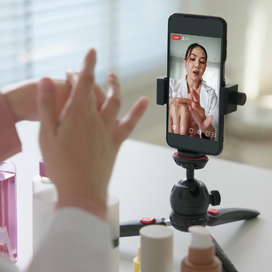
Canadian small businesses are winning on TikTok. Learn what to post, how often, how to get found in TikTok search and why TikTok Shop is not here yet.

Accessibility requirements Canadian storefronts and websites need to meet
This guide explains AODA compliance, Ontario storefront rules, website accessibility duties and checkout accessibility steps for Canadian small businesses.

Plan a Small Business Month campaign with 8 shop local ideas, from gift card bonuses and loyalty offers to events and customer spotlights.