

Growth Strategies, Retail
Inventory management basics for small Canadian retailers
A practical guide for small retailers on stock control, reorder points, carrying cost, shrinkage and the role of a POS inventory management system.

Imagine browsing a retailer's website for a pair of jeans, adding them to your cart, then heading to the store — only to find that the online discount doesn't apply in person. Frustrating, right? Now imagine the reverse: a seamless experience where prices, promotions, and your loyalty points follow you everywhere. That's the promise of unified commerce.
Today's shoppers don't think about channels. They move fluidly between mobile apps, websites, and physical stores — often in the same purchase journey. According to Kibo Commerce, 77 per cent of consumers say they're more likely to buy from brands that deliver a consistent experience across touchpoints. Unified commerce is how modern retailers make that happen.
In this guide, you'll learn what unified commerce is, how it differs from omnichannel retail, its key components, and why Canadian businesses are increasingly making the switch.

Unified commerce is a retail strategy that connects all sales channels — in-store, online, mobile, and beyond — into a single, integrated platform. Unlike older approaches that simply link separate systems together, unified commerce runs everything from one central hub: inventory, customer data, orders, and payments are all managed in real time from the same source.
The result? Every channel sees the same pricing, the same stock levels, and the same customer profile. Whether your shopper is returning an online order in-store, checking loyalty points on their phone, or buying through a kiosk, the experience is seamless.
These terms are often used interchangeably, but they describe very different levels of integration:
| Omnichannel / Multichannel | Unified Commerce | |
| Data | Siloed — each channel has its own data | Single source of truth across all channels |
| Customer view | Fragmented — customers may need to re-enter info | 360° real-time profile follows every interaction |
| Inventory | Managed per-channel; prone to discrepancy | Live inventory synced across all locations |
| Technology |
Multiple disconnected platforms patched together | One integrated platform powering all channels |
| Customer experience | Inconsistent pricing, loyalty and offers | Seamless, consistent experience everywhere |
A true unified commerce strategy is built on four pillars:
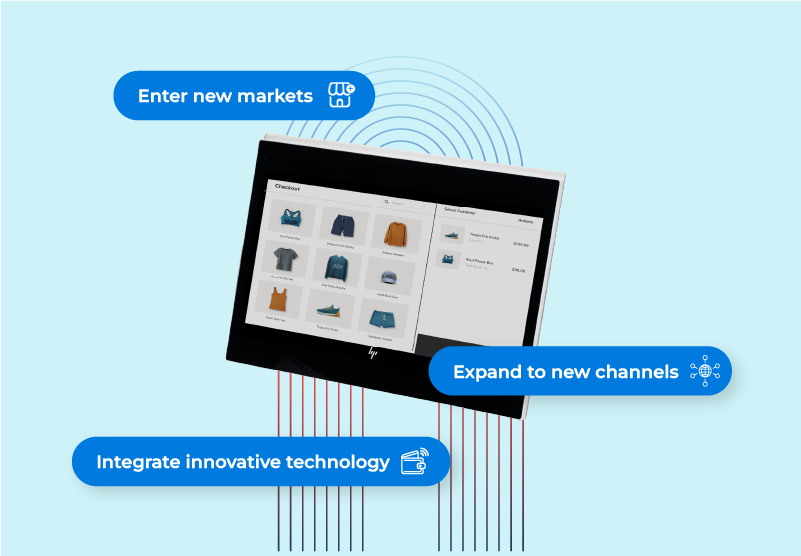
Unified commerce consolidates all of your business operations — payments, inventory, customer records, and order management — onto a single platform. Instead of managing five different software subscriptions that barely talk to each other, everything lives in one place. This means less manual work, fewer errors, and a clearer picture of how your business is performing at any moment.
For example, Moneris Total Commerce brings together in-store POS, online sales, and back-office management under one roof, so you're never reconciling data between disconnected systems.
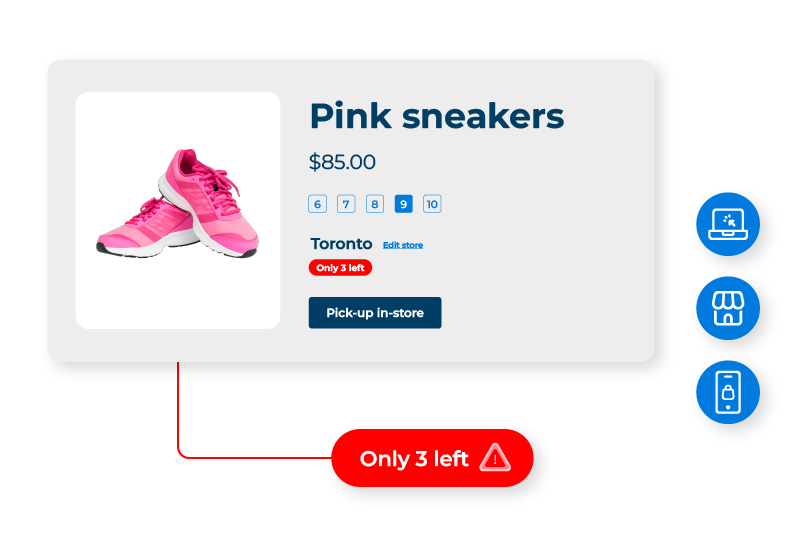
Unified commerce ensures that your online store, physical locations, mobile app, and any other sales channels all share the same inventory and pricing in real time. This eliminates painful situations like overselling a product that's already out of stock, or a customer being told their online coupon "doesn't work in-store."
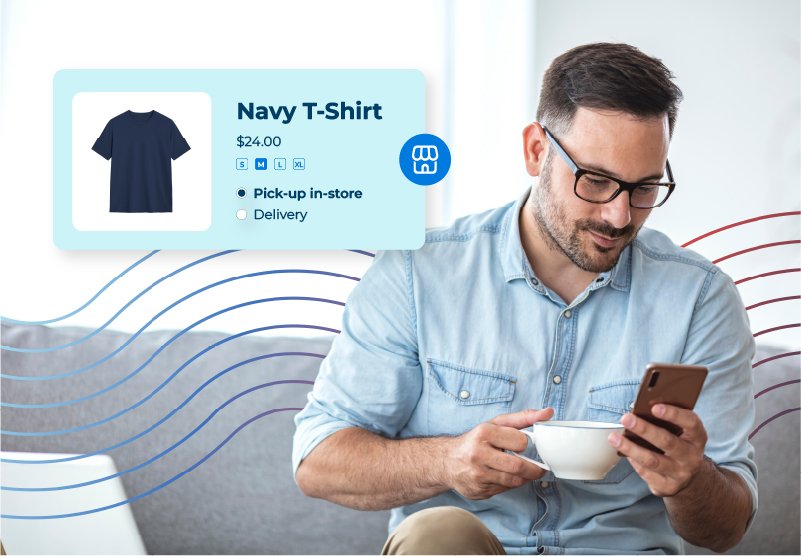
It also enables powerful capabilities like Buy Online, Pick Up In-Store (BOPIS), curbside pickup, and endless aisle — where store staff can order an out-of-stock item from another location directly on the POS.
With unified commerce, product descriptions, pricing, promotions, and inventory counts are consistent everywhere your customers shop. This builds trust — customers know they won't find conflicting information on your website versus your app versus your store signage. It also simplifies your internal operations: product updates made once propagate everywhere automatically.
Because all customer data flows into one system, every touchpoint can be personalized. Your store associate can see a customer's online purchase history and loyalty points. Your email campaigns can reference what a customer browsed in-store. Your checkout can offer one-click purchase for returning customers.
This level of personalization was once available only to large enterprises with massive tech budgets. Unified commerce platforms are making it accessible to Canadian small and medium-sized businesses too.
Customers can start a transaction on any channel and finish it on another without friction. Returns are simpler, loyalty points work everywhere, and pricing is always consistent. That kind of convenience drives repeat business and word-of-mouth referrals.
A unified customer profile means you can tailor promotions, recommendations, and communications to individual customers based on their full history with your brand — not just what they did on one channel. This drives loyalty and increases average order value.
Unified commerce isn't just a technology upgrade — it's a fundamental shift in how you serve your customers. By connecting every channel on a single platform, Canadian retailers can deliver the seamless, personalized experiences that today's shoppers expect, while simplifying their own operations and gaining the insights they need to grow.
Whether you're a single-location retailer looking to launch online, or an established brand with multiple locations ready to eliminate data silos, unified commerce is the foundation for what comes next.
Take the next step: See how Moneris Total Commerce can unify your in-store and online operations. Visit Moneris Total Commerce or call 1-833-310-6606 to speak with a Moneris advisor.

Growth Strategies, Retail
A practical guide for small retailers on stock control, reorder points, carrying cost, shrinkage and the role of a POS inventory management system.

Growth Strategies, Small Business
Canadian small businesses are winning on TikTok. Learn what to post, how often, how to get found in TikTok search and why TikTok Shop is not here yet.

Growth Strategies, Small Business Month
Accessibility requirements Canadian storefronts and websites need to meet
This guide explains AODA compliance, Ontario storefront rules, website accessibility duties and checkout accessibility steps for Canadian small businesses.

Growth Strategies, Small Business, Small Business Month
Plan a Small Business Month campaign with 8 shop local ideas, from gift card bonuses and loyalty offers to events and customer spotlights.