




Fraud Tools, Fraud Prevention
What is payment fraud? Prevention and protection for Canadian businesses
Learn what payment fraud is, how it happens and how to prevent it to protect your business and customer payments.
 Calculating time...
Payment fraud involves unauthorized transactions or deceptive attempts to access funds, payment credentials or sensitive financial information. It can affect any business that accepts card or digital payments, often resulting in financial loss, chargebacks or reputational harm.
As payment technology evolves, fraudsters continue to target online transactions, stolen card details and customer accounts. Card-not-present fraud and chargeback fraud are among the most common examples, and they can impact businesses of any size or industry.
Understanding how fraud works in Canada is especially important as digital payments continue to grow and tactics evolve alongside modern payment technology. This guide explains common fraud types, how they happen and the tools and strategies that help businesses strengthen payment security and accept payments securely—every time.
Payment fraud happens when someone uses stolen or manipulated payment information to complete a transaction without proper authorization. It can involve credit cards, debit cards, digital wallets, bank transfers or other electronic payment methods. The goal is typically to obtain money, goods or services under false pretenses—often before the fraud is even detected.
Unlike simple billing errors or customer disputes, payment fraud involves deliberate deception. Fraudsters may use stolen card numbers, access compromised accounts or impersonate legitimate customers to complete transactions. In many cases, businesses don’t realize fraud has occurred until a chargeback is requested or suspicious activity is identified during transaction review.
Payment fraud can occur both online and in-person. Online transactions are especially vulnerable because physical cards and identity documents are not present for verification. However, in-store fraud can also occur through counterfeit cards, stolen cards or attempts to bypass standard payment procedures.
As payment technology continues to evolve, so do fraud tactics. Understanding what payment fraud is and how it affects payment processing helps businesses recognize potential risks and maintain secure, reliable payment operations.
Payment fraud can take many forms, and each type targets different parts of the payment process. Some schemes focus on stealing payment credentials, while others rely on deception, account access or exploiting transaction policies. Here are the most common types of payment fraud to recognize where risks exist and how they can occur in real-world scenarios.
Card-not-present fraud
Card-not-present fraud occurs when stolen payment card information is used to complete a transaction without physically presenting the card. This typically happens in online, phone or mail orders, where fraudsters only need key details such as the card number, expiration date and security code. Because there’s no physical verification, these transactions carry a higher risk of unauthorized use.
This type of fraud is one of the most common challenges for businesses that accept remote payments. Fraudsters often obtain card details through data breaches, phishing attacks or compromised websites, then use that information to make purchases before the cardholder or business detects suspicious activity.
Chargeback fraud—sometimes called friendly fraud—happens when a customer disputes a legitimate transaction and claims it was unauthorized or invalid. In these cases, the cardholder may have received the goods or services but requests a refund through their bank instead of contacting the business directly.
Chargebacks can result in lost revenue, additional fees and increased scrutiny from payment providers. Even when unintentional, frequent disputes can create operational challenges and affect a business’s ability to process payments smoothly.
Account takeover fraud occurs when an attacker gains unauthorized access to a customer’s account. This often happens through stolen login credentials, weak passwords or phishing attacks that trick users into revealing sensitive information.
Once access is obtained, fraudsters can make purchases, change account details or transfer funds. Because the activity appears to come from a legitimate account, it can be difficult to detect immediately, increasing the risk of financial and operational impact.
Authorized push payment fraud occurs when individuals or businesses are tricked into voluntarily sending money to a fraudulent account. This often involves impersonation, such as someone posing as a supplier, service provider or trusted organization requesting payment.
These scams rely on deception rather than system vulnerabilities, making them especially difficult to detect through technical controls alone. Businesses that regularly process invoices or electronic transfers may be particularly vulnerable to this type of fraud.
Refund fraud involves manipulating a business’s return or refund process to obtain money or goods illegitimately. This can include returning stolen merchandise, falsely claiming a refund or exploiting weaknesses in refund policies.
This type of fraud can lead to financial losses and increased administrative workload. Over time, repeated refund fraud may also disrupt inventory management and affect overall business operations.
Once fraudsters obtain this information, they can use it to access accounts, initiate transactions or carry out other forms of payment fraud. Because these tactics exploit human trust rather than technical systems, awareness and vigilance play an important role in reducing risk.
Payment fraud usually begins when fraudsters gain access to payment information or exploit weaknesses in security systems. These attacks often occur behind the scenes, making them difficult to detect. Here are the most common ways in which payment fraud is carried out.
The most common way payment fraud is carried out is with stolen payment credentials, such as card numbers, login details or account information. Fraudsters may obtain this data through phishing emails, compromised websites, unsecured networks or previous data breaches. Once they have valid credentials, they can use them to make purchases or access accounts without raising immediate suspicion.
Because the information itself is legitimate, fraudulent transactions can appear normal at first. This makes stolen credentials especially dangerous, as businesses may not realize fraud has occurred until a customer reports unauthorized activity or a chargeback is initiated.
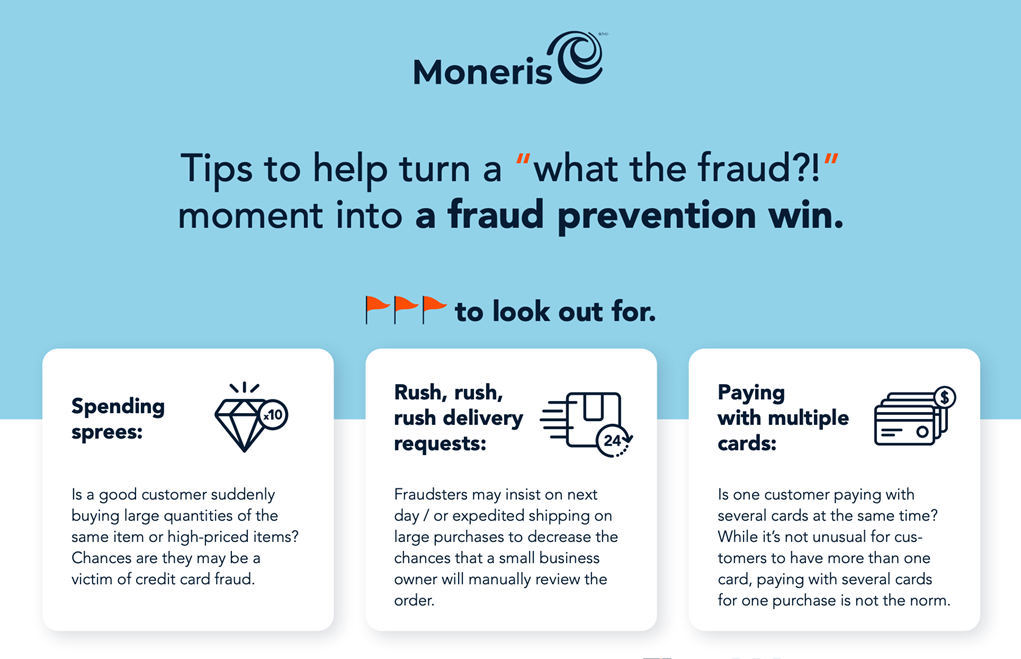
Payment fraud often reveals itself through unusual transaction patterns or suspicious customer behaviour. Recognizing these warning signs early can help businesses investigate activity and reduce potential financial and operational impact.
Moneris also provides additional guidance to help businesses recognize fraud risks and respond appropriately. You can also review our fraud prevention reference guide for a visual overview of common warning signs and prevention best practices.
That said, here's what to pay attention to.
Payment fraud can have immediate financial consequences and long-term operational impacts. Beyond lost revenue, it can affect customer trust, internal resources and a business’s ability to process payments reliably.
Financial loss is one of the most direct consequences of payment fraud. Businesses may lose revenue from unauthorized transactions, refunded purchases or goods that can’t be recovered.
Chargebacks can create additional financial strain. In addition to losing the original transaction amount, businesses may face chargeback fees and increased monitoring from payment providers. Frequent chargebacks can also affect a business’s ability to accept payments smoothly.
Payment fraud often requires immediate investigation and response, which can disrupt normal business operations. Staff may need to review transactions, respond to disputes and communicate with payment processors or financial institutions. This can divert time and resources away from core business activities.
Repeated fraud incidents can also lead to stricter internal procedures and additional verification steps. While these safeguards are important, they may slow down payment workflows and require ongoing administrative attention.
Customer trust plays a critical role in any business relationship. When fraud occurs, customers may question whether their payment information is being handled securely. This can affect their confidence in making future purchases.
Reputational damage can also impact long-term customer relationships and brand perception. Businesses that experience frequent fraud incidents may find it more difficult to maintain customer loyalty and attract new customers.
Payment fraud can expose weaknesses in payment security practices and increase compliance responsibilities. Businesses that handle payment data are expected to follow security standards designed to protect customer information. Failure to maintain strong safeguards can increase fraud risk.
Fraud incidents may prompt businesses to review their systems, update security measures and strengthen internal controls. Maintaining secure payment infrastructure and following established security standards helps reduce vulnerabilities and protect sensitive payment data.
Preventing payment fraud requires a proactive approach that combines secure payment technology, strong data protection practices and internal safeguards. Businesses that implement layered security measures can significantly reduce their exposure to fraud risk, and understanding common fraud prevention tips and tactics can further strengthen their protection.
Secure payment systems play a critical role in preventing unauthorized transactions and protecting sensitive payment information. Modern payment infrastructure uses technologies such as encryption and tokenization to ensure payment data cannot be easily intercepted or reused.
These systems may also support PCI DSS compliance, which establishes security standards for handling cardholder data. Using payment systems designed with built-in security protections helps businesses reduce vulnerabilities and process transactions more safely.
Monitoring payment activity helps businesses identify suspicious patterns before fraud causes significant damage. Unusual transaction amounts, repeated payment attempts or unexpected account activity can indicate elevated fraud risk.
Payment systems with built-in monitoring capabilities can help detect anomalies and flag potentially fraudulent transactions. Early detection allows businesses to review activity quickly and take steps to prevent further unauthorized transactions.
Protecting payment data is essential for reducing fraud risk and maintaining customer trust. Sensitive payment information should be handled securely and only stored when necessary, using systems designed to protect transaction data.
Businesses should also ensure their payment processes follow established security standards and best practices. Protecting customer information helps prevent unauthorized access and reduces opportunities for fraud.
Employees play an important role in preventing payment fraud. Staff should understand common fraud risks and follow secure procedures when processing transactions or handling payment information.
Clear internal processes help reduce errors and improve fraud awareness. Businesses that maintain strong internal safeguards and consistent security practices are better positioned to prevent fraud and protect their operations.
Responding quickly to payment fraud can help limit financial losses and prevent further unauthorized activity. Taking the right steps ensures the incident is contained, investigated and addressed appropriately.
The first priority is to secure any affected accounts, payment systems or access points. This may include resetting passwords, restricting account access or reviewing recent system changes to prevent further unauthorized activity.
Taking immediate action helps contain the issue and reduces the risk of additional fraudulent transactions. Ensuring that only authorized users have access to payment systems is essential for restoring control and maintaining security.
Carefully reviewing recent transactions helps determine the extent of the fraud and identify any suspicious activity. This includes looking for unusual transaction amounts, unfamiliar customers or unexpected changes to account information.
Understanding the scope of the incident allows businesses to take appropriate action and strengthen any areas where vulnerabilities may exist. Documenting findings can also help support investigations and dispute resolution.
Contacting your payment processor and financial institutions as soon as possible is critical. They can help investigate the incident, provide guidance and take steps to prevent additional fraudulent transactions.
Early notification improves the chances of limiting financial impact and helps ensure proper procedures are followed. Payment providers may also recommend additional security measures to protect your business.
Maintaining clear records of the incident, including affected transactions and actions taken, helps support internal review and future prevention efforts. This documentation may also be needed when working with financial institutions or resolving disputes.
After addressing the immediate issue, businesses should review their payment security practices and strengthen safeguards where needed. Improving payment security measures helps reduce future risk and reinforces overall payment protection.
Modern payment infrastructure uses multiple layers of protection to help safeguard transaction data, verify payment activity and reduce exposure to unauthorized access.
These systems use layered security measures designed to prevent, detect and respond to fraud threats throughout the transaction lifecycle.
Encryption protects payment data by converting sensitive information into unreadable code during transmission. This ensures that even if data is intercepted, it cannot be used without proper authorization. Encryption helps protect cardholder data throughout the payment process.
Tokenization adds another layer of protection by replacing sensitive payment information with unique tokens that have no exploitable value. This prevents actual card data from being stored or exposed, reducing the risk of data theft and unauthorized reuse.
Authentication tools help confirm that transactions are being performed by authorized users. Methods such as multi-factor authentication, device verification and secure login protocols help prevent unauthorized account access.
These verification measures reduce the risk of account takeover and unauthorized transactions. Strengthening authentication helps ensure that only legitimate users can access payment systems and complete transactions.
PCI DSS compliance establishes security standards for protecting cardholder data. Payment systems designed to support PCI DSS compliance help ensure payment information is handled securely and protected from unauthorized access.
Secure infrastructure also includes safeguards such as access controls, secure networks and system monitoring. These protections help reduce vulnerabilities and strengthen overall payment security.
Payment fraud can take many forms, but one common example is when a stolen credit card is used to make a purchase without the cardholder’s knowledge. This often happens in online transactions where physical verification isn’t required, allowing fraudsters to enter stolen card details and complete purchases remotely. Another example is chargeback fraud, where a customer falsely claims a legitimate transaction was unauthorized to obtain a refund. Both scenarios result in financial loss for the business and can lead to additional operational and administrative burdens as the transaction is investigated and resolved.
Protecting your business from payment fraud involves using secure payment systems designed to support PCI DSS compliance, monitoring transactions for unusual activity and ensuring sensitive payment data is handled safely. Technologies like encryption, tokenization and authentication help protect payment information and reduce the risk of unauthorized access. It’s also important to maintain clear internal processes and stay aware of common fraud tactics. Combining secure payment infrastructure with informed business practices helps reduce risk and allows your business to accept payments confidently while protecting revenue and customer trust.
Payment fraud typically occurs when attackers gain access to payment information through methods such as phishing, data breaches or malware. They may use this information to make unauthorized purchases, transfer funds or impersonate legitimate customers or businesses. In some cases, fraud relies on social engineering, where individuals are tricked into voluntarily providing payment details or approving fraudulent transactions. These tactics exploit both technical vulnerabilities and human behaviour, making awareness and secure payment systems essential for reducing fraud risk.
Certain transaction patterns can indicate potential payment fraud, such as unusually large purchases, repeated failed payment attempts or requests for expedited shipping. These behaviours may signal that stolen payment information is being tested or used before detection. Other warning signs include sudden changes in customer purchasing behaviour or multiple transactions using different cards in a short period. Recognizing these indicators early allows businesses to review suspicious activity and take appropriate steps to reduce potential losses.

Fraud Tools, Fraud Prevention
Learn what payment fraud is, how it happens and how to prevent it to protect your business and customer payments.

Fraud Tools, Fraud Prevention
Moneris data reveals rising fraud trends in 2025, including growth in Card Not Present fraud and account takeover cases. Learn how Canadian businesses can protect themselves with secure payment tools, stronger authentication and better cybersecurity practices.
Fraud Tools, Fraud Prevention
Test your business’s cyber safety with this quick fraud prevention quiz. Learn where you stand and get practical steps to protect your data and customers.

Fraud Tools, Fraud Prevention
Learn how fraud prevention tools help Canadian businesses reduce chargebacks, protect revenue and accept payments securely.