


Fraud Tools, Fraud Prevention
What is payment fraud? Prevention and protection for Canadian businesses
Learn what payment fraud is, how it happens and how to prevent it to protect your business and customer payments.
 Calculating time...

No matter where or how your business accepts payments, your payment infrastructure should include powerful fraud prevention. Whether you take payments in person, online or through invoices, the right tools should fit directly into your existing payment workflow.
Start by using payment systems that verify transactions in real time. Tools such as Address Verification Service (AVS), Card Verification Value (CVV) checks and real-time transaction monitoring help confirm that the person making the purchase is authorized to use the payment method. These checks happen instantly and can flag or decline suspicious transactions before they’re approved.
It’s also important to choose tools that protect sensitive payment card data like the payment account number (PAN) and CVV. Technologies like tokenization and encryption protect payment information by replacing card numbers with secure tokens and transmitting data safely. This lowers your exposure to fraud risk and simplifies security requirements.
Lastly, look for tools that give you visibility and control. Payment dashboards, alerts and reporting features help you review transactions, identify unusual patterns and respond quickly if needed. When fraud prevention tools are built into your payment system, stopping fraud becomes part of your normal operations—not a separate process to manage.
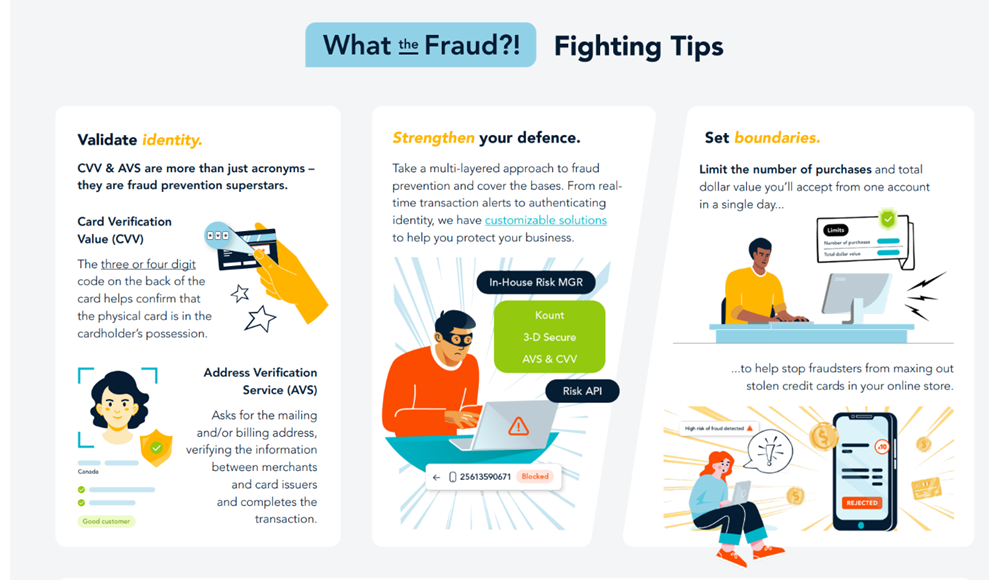
Modern payment systems include built-in checks that help confirm customer identity, protect card data and flag suspicious activity. These tools work together during each transaction so you can accept payments with greater confidence and fewer manual reviews.
3-D Secure: 3-D Secure adds an extra identity check between the customer and their card issuer during online payments. The cardholder may be asked to confirm the transaction using a one-time code, banking app approval or biometric verification, helping reduce unauthorized purchases and chargebacks.
Preventing fraud starts by choosing the right payment tools. These tools protect your business without adding operational complexity. They should reduce compliance burden, support secure payment processing and work reliably across your entire setup. Here’s what to look for.
PCI compliance becomes more complex when your systems directly handle cardholder data. Tools that securely capture and process payment information outside your environment reduce your compliance scope and the number of controls your business must manage.
This makes annual validation faster and lowers the risk of accidental exposure. It also reduces the need for additional security infrastructure and internal safeguards. For most SMBs, using payment systems designed to limit direct exposure to card data makes compliance easier to maintain while supporting strong protection.
Most businesses accept payments through in-person payment terminals, e-commerce checkout and mobile devices. Fraud prevention tools should work consistently across all channels so protection remains active regardless of how payments are processed.
Using separate tools creates visibility gaps and increases operational complexity. A unified system ensures the same verification, authentication and monitoring standards apply everywhere. This improves consistency and makes payment security easier to manage without relying on disconnected tools.
Fraud prevention tools should actively help identify risk during the transaction process. Automated verification helps validate cardholder details, flag unusual patterns and provide signals that support approval decisions.
Automation improves efficiency by reducing manual review and ensuring verification happens consistently. This reduces oversight risk and helps staff focus on daily operations. Over time, automated tools strengthen payment security without increasing workload or slowing checkout.
Fraud prevention tools work best when they’re built directly into the payment system. Providers that integrate security into terminals, checkout and processing infrastructure help ensure protection is applied automatically during every transaction.
This reduces setup complexity and eliminates the need to manage separate security tools. It also improves visibility into transaction activity and simplifies long-term management. Integrated protection helps your business maintain consistent payment security as it grows.
Fraud prevention becomes much easier when protection is built directly into the payment tools you use every day. Moneris secures transactions using encrypted terminals, tokenization and authentication tools that help verify payments and protect card data automatically. This allows your business to accept payments confidently without managing separate security systems.
Moneris also helps simplify ongoing protection by supporting PCI-aligned payment environments and providing guidance when needed. With integrated fraud prevention tools and 24/7 support in English and French, your business can resolve issues quickly and continue accepting payments securely as it grows.
Payment fraud can often be detected by identifying unusual transaction patterns, such as repeated payment attempts, unexpected changes in customer behaviour or transactions that don’t match typical purchase activity. Modern payment systems include real-time monitoring that flags suspicious transactions, allowing them to be reviewed before they result in financial loss.
Payment providers also support fraud detection by securing payment infrastructure, monitoring transaction activity and providing tools that identify elevated fraud risk. This allows businesses to respond quickly while continuing to accept payments securely.
The most effective fraud prevention tools protect payment data and help verify transactions throughout the payment process. These include encryption, tokenization, address verification and authentication tools that confirm payments are legitimate and prevent sensitive data from being exposed.
Payment systems designed with built-in security protections also help automatically detect suspicious activity. Using secure payment tools reduces the risk of fraud and allows businesses to accept payments safely.
Yes, fraud prevention tools protect both online and in-person transactions by securing payment data and supporting transaction verification.
Secure payment terminals protect in-person payments using encrypted processing, while online payment systems use authentication and monitoring tools to help verify transactions.
Payment providers help reduce fraud risk by securing payment infrastructure, encrypting transaction data and providing tools that detect suspicious activity. These protections ensure sensitive payment information is handled securely throughout the transaction process.
They also support tokenization, authentication and real-time monitoring that help businesses reduce fraud exposure and simplify payment security.
Fraud Tools, Fraud Prevention
Learn what payment fraud is, how it happens and how to prevent it to protect your business and customer payments.

Fraud Tools, Fraud Prevention
Moneris data reveals rising fraud trends in 2025, including growth in Card Not Present fraud and account takeover cases. Learn how Canadian businesses can protect themselves with secure payment tools, stronger authentication and better cybersecurity practices.
Fraud Tools, Fraud Prevention
Test your business’s cyber safety with this quick fraud prevention quiz. Learn where you stand and get practical steps to protect your data and customers.

Fraud Tools, Fraud Prevention
Learn how fraud prevention tools help Canadian businesses reduce chargebacks, protect revenue and accept payments securely.